
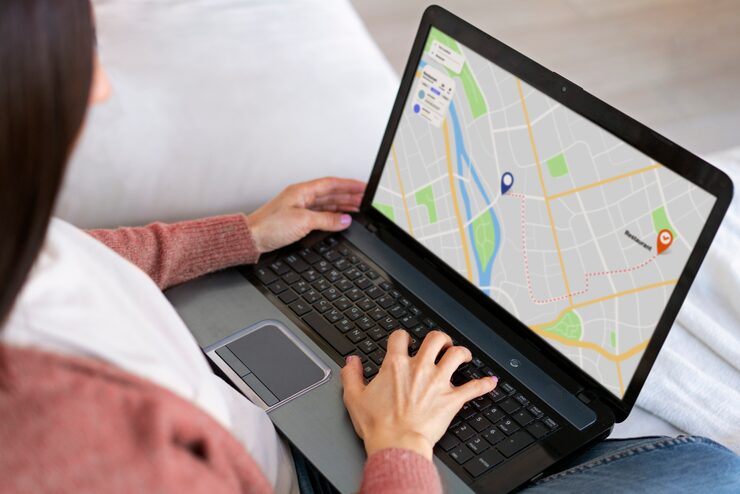
Courier Route Optimization is quietly shaping the future of last-mile logistics. While most consumers see only the final doorstep delivery, logistics teams know that the real victory happens long before the vehicle begins its journey. Speed is no longer about driving faster. It is about planning smarter. The modern courier ecosystem depends on intelligent routing, live-location scanning, predictive traffic patterns and behavior-based delay prevention.
The logistics world used to run on static maps and human guesswork. Today, advanced routing engines study weather feeds, congestion patterns and delivery density before a driver even starts the vehicle. The reason companies like Swiggy Instamart, Amazon and Zepto deliver within minutes is not luck; it is routing science working underneath the surface. The customer experiences speed, but the system is actually delivering precision.
A powerful story comes from a local delivery startup in Bangalore that nearly shut down in its first year because fuel costs swallowed profits. They were sending vans with good capacity but poor route intelligence. Once they invested in a basic smart-routing layer, fuel costs dropped sharply and the same drivers finished shifts faster without working harder. Overnight, waste turned into margin. That is the invisible magic of planning before motion. (Courier Route Optimization)
This is why experienced logistics managers say that smart delivery is not about wheels on road but thinking before wheels roll. Behind almost every on-time delivery stands a silent network of geodata, predictions and micro-decisions. This planning layer is where the courier world is quietly evolving.
Why Courier Route Optimization Defines Reliability
Legacy distribution models assumed that the closest route was the best route. Modern routing exposes how untrue that belief was. Traffic jams, school zones, peak-hour signals and construction patches can neutralize a “shorter” road in seconds. A route that looks long on a map may actually be faster in practice because it avoids friction points invisible to the basic navigation view.
Reliability in delivery timings is the real business trust. Customers remember delays more than punctuality because a delay disrupts their schedule. A smart system absorbs uncertainty before it touches the customer. When dispatch planning predicts bottlenecks, the driver never even reaches the danger zone. This is how routing shapes brand confidence without a marketing team lifting a finger.
A standout benefit of Courier Route Optimization is the way it helps drivers move mentally lighter. When a driver knows the system already filtered out the risky roads, he drives with calm focus and saves energy for navigation awareness. A stressful route burns more than fuel; it burns productivity. Smarter routing protects not only time but human effort.
How Courier Route Optimization Builds Real Speed
Speed in logistics is not acceleration, it is elimination of waste. Every minute saved in planning expands into more minutes saved in execution. This is especially visible in high-density zones such as Delhi NCR or Mumbai suburbs. Earlier, couriers took the shortest path but waited fifteen minutes at a choking intersection. Now, smart routing repositions stops to slip through micro-gaps in traffic windows. (Courier Route Optimization)
Imagine a courier who must deliver fifteen packages in a congested block. A poor route turns fifteen deliveries into fifteen negotiations with the road. A good route turns the same fifteen into a fluid track with fewer stops. This is why modern dispatch centers have route intelligence dashboards that refresh by the minute. Efficiency is a living process, not a one-time map.
Many small courier businesses think routing engines are only for billion-dollar companies. But the new-gen cloud tools available in India are built for small operators too. Even two-van operations can lift performance by applying baseline routing intelligence. When a company learns to plan before departure, delivery success becomes repeatable, not accidental.
The Human Layer Behind Courier Route Optimization
Technology is powerful, but the human is still the anchor of delivery culture. A routing engine can recommend the best lane, but a driver’s observation converts that suggestion into reality. The sweet spot is where instinct meets data. An experienced driver reads micro-signals like sudden crowd gathering, unofficial road barricades, holiday traffic or local event noise. When that instinct pairs with routing software, outcome reliability climbs sharply.
The most underrated part of routing is communication. A driver who reports ground complications in real time helps the system update not just his route but all other upcoming routes. Every correction teaches the network to become smarter. This living feedback loop is how elite logistics cultures outperform static competitors. (Courier Route Optimization)
Smart delivery is therefore not a map problem but a teamwork model. Dispatchers, drivers and systems are three voices in the same conversation. The faster they talk, the smoother the last mile becomes. That is why courier firms rising in India today build routing literacy training for drivers alongside map technology.
Data Is the New Fuel of Courier Route Optimization
Logistics success now depends less on kilometers covered and more on kilometers correctly chosen. Data is the invisible highway beneath every drive. Routing engines track seasonal changes, festival crowd surges, rainfall-induced bottlenecks and police diversions. Over time, this intelligence converts into a pattern dictionary. The system stops reacting and starts predicting.
Even fuel budgeting becomes simpler. When a business knows its daily route risk before ignition, it sets realistic fuel expectations and protects profit per kilometer. Profitable couriers are not merely fast; they are predictable. And predictability is the final reward of a strong routing culture.
This is why companies investing early in Courier Route Optimization are building long-term defensibility. Their advantage compounds silently. A competitor can copy pricing. A competitor can copy advertising. But a deeply learned route network is not easy to copy. It is a moat created through patience, repetition and feedback.
Smart Routing as Customer Experience
Customers rarely talk about routing, yet they feel its presence every time a package arrives exactly when expected. Delivery timing is emotional for the end user. It influences trust more than product price. Smart routing does not show itself on the tracking screen, but it echoes inside the reliability score a user builds unconsciously.
In real estate they say location is everything. In logistics, timing is everything. A package that arrives without friction builds loyalty without marketing expense. That is why route intelligence is not an operational convenience; it is a customer memory engine wrapped in motion. (Courier Route Optimization)
Businesses that understand this are transitioning from manual dispatch to intelligent dispatch because precision is now the only way to scale without chaos. When timing becomes predictable, a company can grow faster without overburdening staff or vehicles. (Courier Route Optimization)
Read also:
track tirupati courier
tirupati courier track
tirupati courier tracking status
tirupati courier tracking shipway
india women’s national cricket team vs sri lanka women timeline
इंग्लंड क्रिकेट संघ वि भारत राष्ट्रीय क्रिकेट संघ सामन्याचे स्कोअरकार्ड
ऑस्ट्रेलिया राष्ट्रीय क्रिकेट संघ वि भारत राष्ट्रीय क्रिकेट संघ सामन्याचे स्कोअरकार्ड