


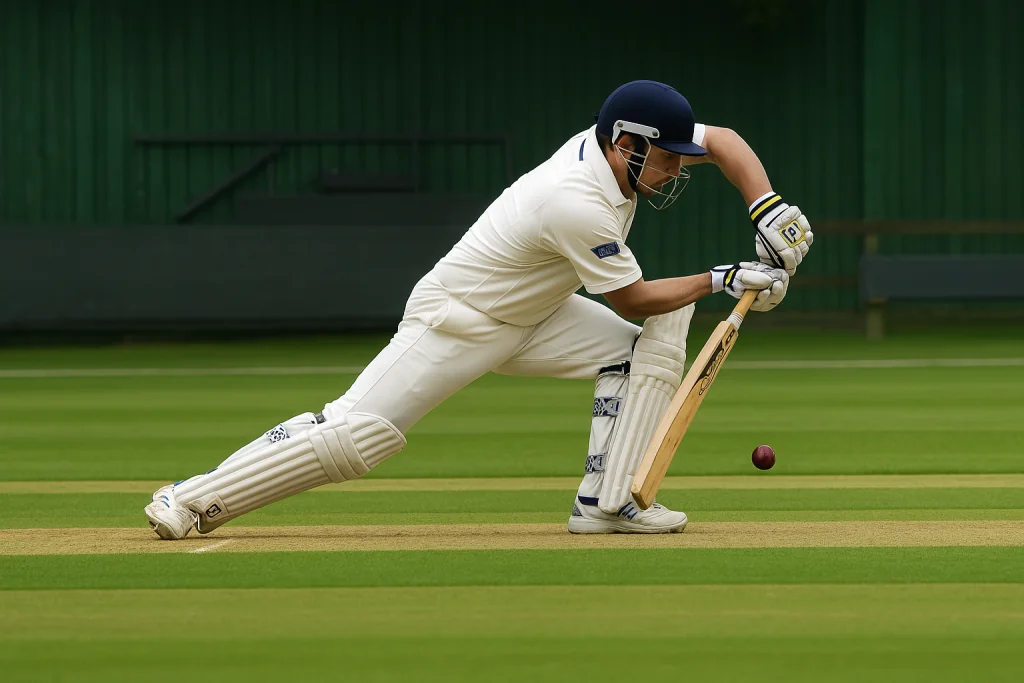
Cricket Shot Selection defines how a batsman dictates the flow of a game. Whether playing at the professional level or in a local league, the ability to choose the right shot at the right time separates good players from great ones. It’s not only about skill—it’s about understanding the situation, reading the field, and maintaining composure under pressure.
Every cricket legend, from Sachin Tendulkar to Virat Kohli, has emphasized the importance of shot selection in building innings and controlling matches. A batsman’s decision-making at the crease reflects not only their technique but also their awareness of game dynamics.
The Art Of Reading Situations In Cricket
Cricket Shot Selection begins with reading the match situation. A player facing a fast bowler with the new ball must adapt differently than when playing spin on a turning pitch. The mindset required during a chase differs from the one needed while setting a target.
Good batsmen analyze the field setup, the bowler’s rhythm, and the pitch behavior before committing to a shot. They understand that patience is as vital as power. In one-day cricket, this might mean rotating strike early and attacking only when settled. In T20s, quick decision-making is key, while in Test cricket, restraint often becomes a weapon.
Mastering shot selection involves mental clarity—knowing when to defend, when to attack, and when to let the ball go. The most successful players can adapt their approach ball by ball.
The Role Of Timing And Technique
When discussing Cricket Shot Selection, timing and technique go hand in hand. A beautifully timed straight drive or an effortless flick off the pads doesn’t just earn runs—it establishes authority.
The key lies in footwork and balance. A front-foot player might rely on drives and flicks, while a back-foot player prefers cuts and pulls. But a complete batsman must master both approaches.
Timing also involves mental rhythm. Rushing a shot can lead to mistimed strokes and easy dismissals. Waiting for the ball, judging its length, and transferring body weight correctly are fundamental aspects that improve accuracy in shot execution.
Batting is about rhythm and anticipation. The best players seem to have more time because they read the game earlier and stay composed, allowing them to execute shots fluidly.
Choosing The Right Shot Under Pressure
Every match situation demands a specific approach, making Cricket Shot Selection a mental challenge as much as a physical one. Under pressure, instincts can take over, but smart players rely on strategy.
For instance, facing a spinner on a dry surface might call for using the crease—either stepping out for a lofted shot or going deep for a cut. Against pace, the same player might prefer controlled deflections or square drives.
One of the biggest mistakes young cricketers make is premeditating shots. While anticipation is useful, overcommitting to a stroke before the ball is bowled can lead to disaster. The ability to adjust mid-delivery distinguishes seasoned batsmen from novices.
Greats like Steve Smith and Kane Williamson are masters at this—they read the line early, stay balanced, and play late, ensuring high control even against quality attacks.
Building Innings Through Controlled Aggression
In modern cricket, aggression dominates headlines, but control wins matches. Cricket Shot Selection allows batsmen to combine aggression with strategy. Controlled aggression means attacking selectively, targeting weaker bowlers, and finding boundaries without unnecessary risk.
A classic example is Virat Kohli’s approach in chases. He rarely plays rash shots early on. Instead, he builds momentum with singles and doubles, then accelerates with precision once set. His shot selection reflects deep awareness of both his strengths and the match scenario.
Even power hitters like Rohit Sharma and Jos Buttler rely on smart shot choices rather than blind hitting. They know when to unleash and when to hold back, ensuring consistent performance without compromising stability.
Adapting To Different Formats
A major test of Cricket Shot Selection lies in adjusting across formats. What works in T20 cricket doesn’t always suit Test conditions. The adaptability of a player defines their success.
In T20s, creativity takes center stage—reverse sweeps, ramps, and slogs are common tools. In ODIs, rotating strike and preserving wickets early while accelerating later becomes essential. In Tests, patience and technique outweigh flair, demanding defensive excellence.
Players like Joe Root and Babar Azam showcase this adaptability perfectly. Their ability to switch gears across formats comes from understanding shot value and risk at every phase of the game.
Reading The Bowler And Field Placement
An intelligent Cricket Shot Selection depends on observing both the bowler’s intent and the field setup. A bowler trying to trap you with an outswinger requires different preparation than one aiming for your pads.
A skilled batsman constantly scans the field—spotting gaps, predicting bowler variations, and exploiting weaknesses. When the mid-wicket is open, flicks and drives become valuable scoring options. When the off-side field is spread, dabs and cuts work better.
This game awareness helps batsmen maintain strike rotation, unsettle bowlers, and build pressure on the opposition. It’s a mental chess game played at high speed, and shot selection is the player’s move on the board.
Learning From The Greats
Cricket history offers countless examples of players who mastered Cricket Shot Selection. Sachin Tendulkar’s balance of aggression and defense made him the most complete batsman of his era. His ability to read bowlers early allowed him to dominate across conditions.
Similarly, AB de Villiers revolutionized modern batting by expanding the shot range while maintaining technical soundness. His innovative yet calculated approach showed that creativity can coexist with control.
Kane Williamson, on the other hand, exemplifies calmness. His precision, timing, and subtle adjustments in shot choice allow him to score effortlessly without taking big risks. These legends show that mastering shot selection is more about decision-making than pure power.
The Mental Side Of Shot Selection
Beyond technique, Cricket Shot Selection is about mindset. Confidence plays a crucial role—hesitation often leads to poor execution. A batsman in form trusts their instincts, while one under pressure may second-guess every move.
Visualization helps overcome this. Many professionals mentally rehearse possible deliveries and their responses before facing each ball. This practice sharpens anticipation and improves decision accuracy under pressure.
Concentration and emotional control are equally important. Staying present—ball by ball—ensures clarity. Losing focus even momentarily can result in poor judgment and missed opportunities.
Practicing Shot Selection Effectively
Training for Cricket Shot Selection involves more than repetitive net sessions. It requires scenario-based practice. Coaches often simulate match conditions—different bowlers, changing targets, or varying field setups—to help players make quick decisions.
Watching match footage and analyzing dismissals also help identify recurring mistakes. The goal isn’t just to hit more runs but to learn which shots suit which conditions and bowlers.
Every session should include mental rehearsal—imagining game pressure and reacting accordingly. This combination of physical and mental preparation builds true match awareness.
Read also:
pakistan women’s national cricket team vs india women’s national cricket team
naman dhir
faheem ashraf stats
bangladesh national cricket team vs india national cricket team matches
pakistan national cricket team vs england cricket team
sri lanka national cricket team vs bangladesh national cricket team
bangladesh national cricket team vs sri lanka national cricket team match scorecard
ker vs gcc